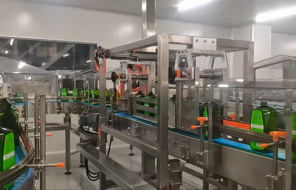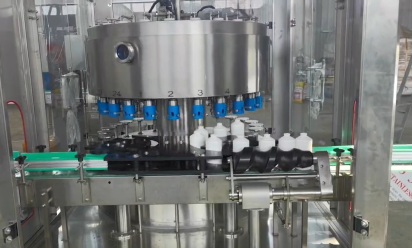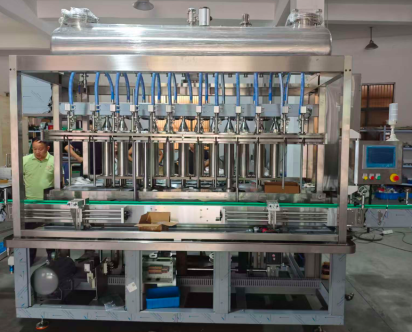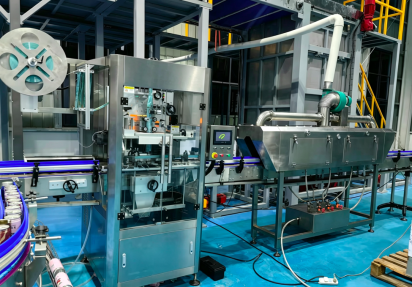
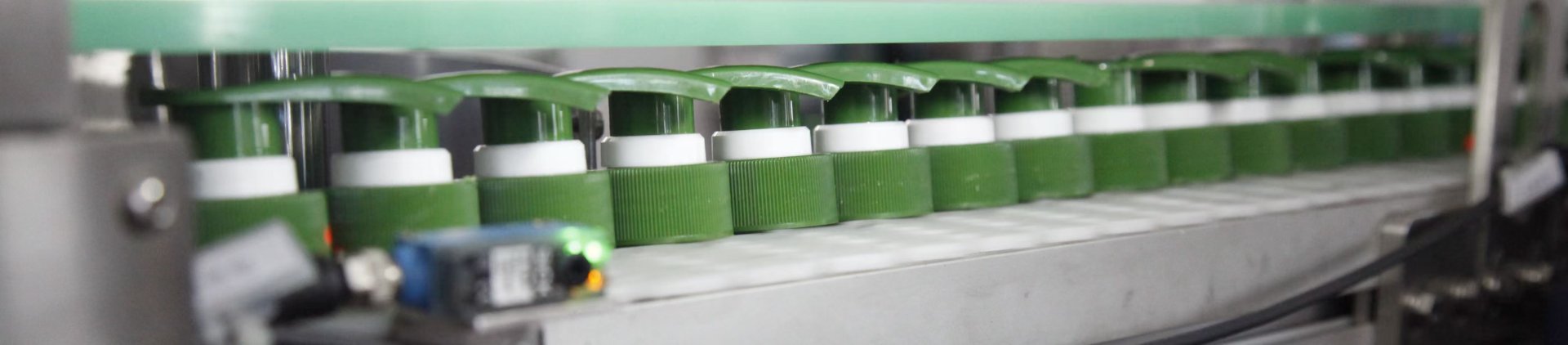
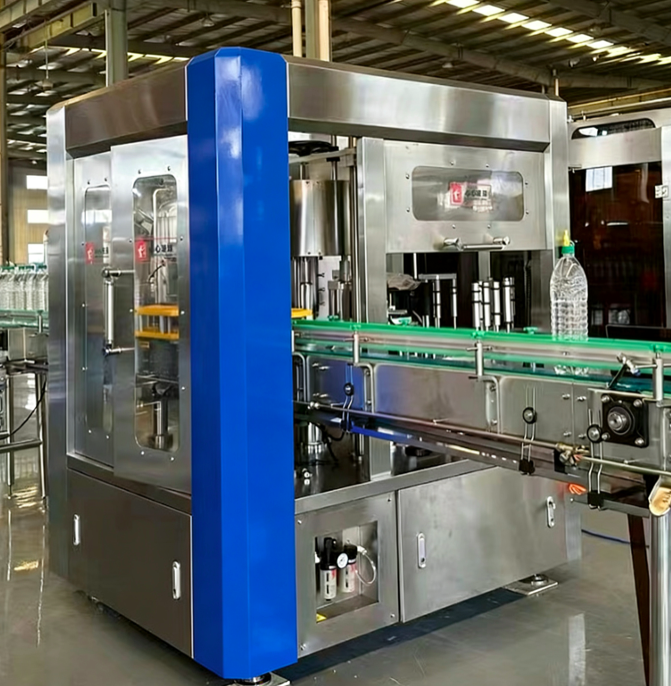
The advantages for OPP Labeling Machine for Bleach Bottles:
The equipment integrates label cutting, adhesive dispensing positioning, and pressing processes, utilizing mesh adhesive application technology to reduce adhesive consumption by 50%. With alignment accuracy reaching ±0.05mm, it ensures flat and wrinkle-free labels. Mainstream models include rotary, linear, and multi-station configurations, compatible with label materials such as OPP film, PET, and self-adhesive labels, as well as containers made of glass, metal, and plastic. Selected models feature vacuum adsorption, electronic cam positioning, and rapid die change capabilities, enabling mold replacement within 5 minutes. Safety mechanisms include bottle-free labeling and overload protection.
Technical Parameters for OPP Labeling Machine for Bleach Bottles:
Power supply: Three-phase 380V 60 Hz
Machine dimensions: 3650mm×1700mmX 2010mm (can be adjusted by customer requirement)
Method of speed adjustment: uninterrupted – adjust rate
Labeling precision: ±1mm
Labeling speed: Normal speed should be guaranteed at 8000BPH
Maximum label width: 200mm (standard width, can be adjusted)
The maximum outer diameter of label: 600mm (can be customized)
Paper core Hot melt: 152 mm
Labeling glue: glue at both ends of each label with hot melt
Gluing temperature: 120~160℃
Labeling type for products: suitable for round or square containers made of plastic, metal, glass
Type of label: OPP, BOPP, paper-plastic composite film, paper label
Labeling stations: 12per cycle
Machine weight: about 3000 kg
wooden box cannot be used for packing for this machine, because this machine width is neat to the container itself.
Power Supply: 3-Phase, 380V AC, 50Hz
The machine should include a safety door interlock function.
Stainless Steel and welding work to be high quality, and polished well.
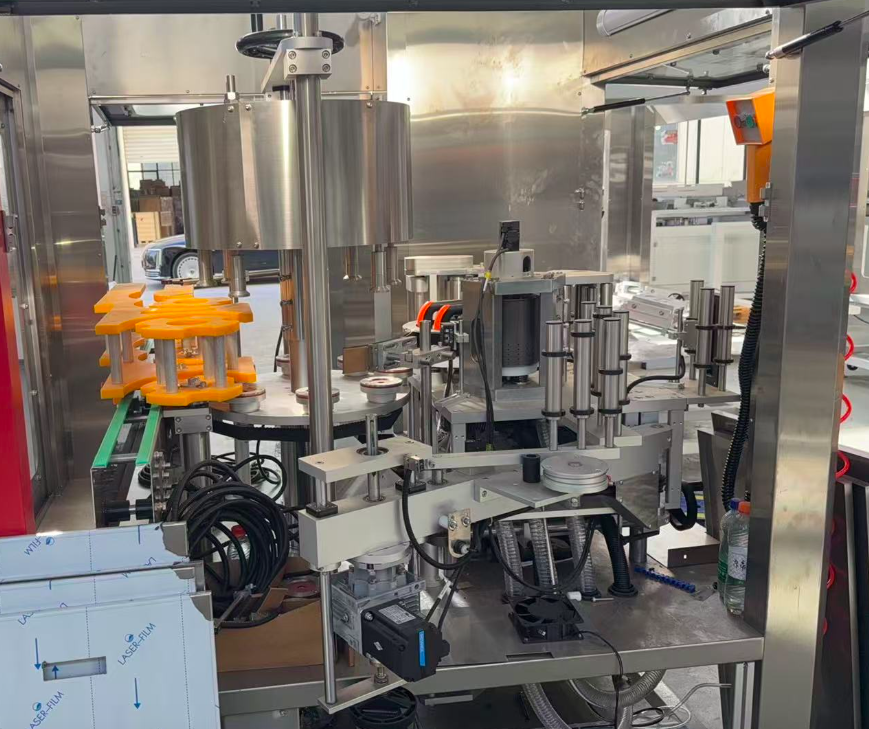
Inside pictures for OPP Labeling Machine for Bleach Bottles:
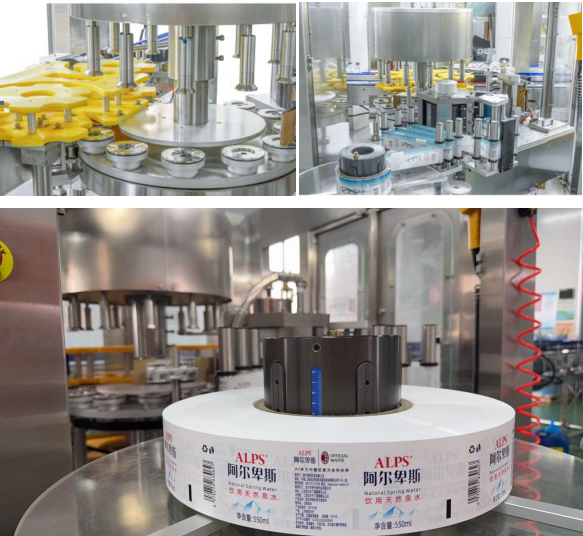
Operation method for OPP Labeling Machine for Bleach Bottles:
The containers are picked up by the infeed star wheel and transferred to the container table.
The container rotation begins when they are positioned between container plates and centering bells. The speed of the feed roller is adjusted to the required label length for continuous web tension. A standard threading unit ensures optimal film feed. In the cutting unit, the labels are precisely cut while a PLC command and servo-motor provide an exact cut-off point. Two narrow strips of hot melt glue the labels together, which are applied by a heated glue roller to the leading and trailing label edges. The label with the glue strip on its leading edge is transferred to the container. This glue strip ensures an exact label positioning and a positive bond. As the container is rotated during label transfer, labels are applied tightly. Gluing of the trailing edge ensures proper bonding. Process: Infeed bottle → pre-position →label cutting → gluing → labeling → label by press out → finish.