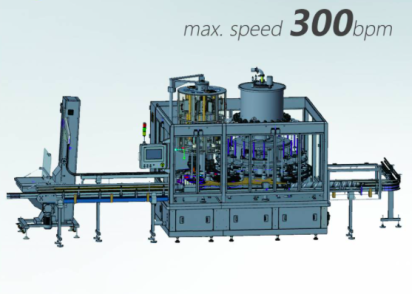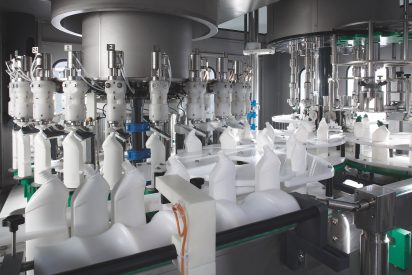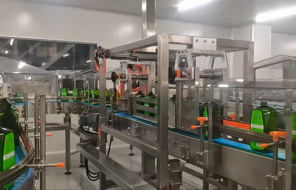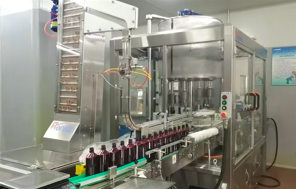

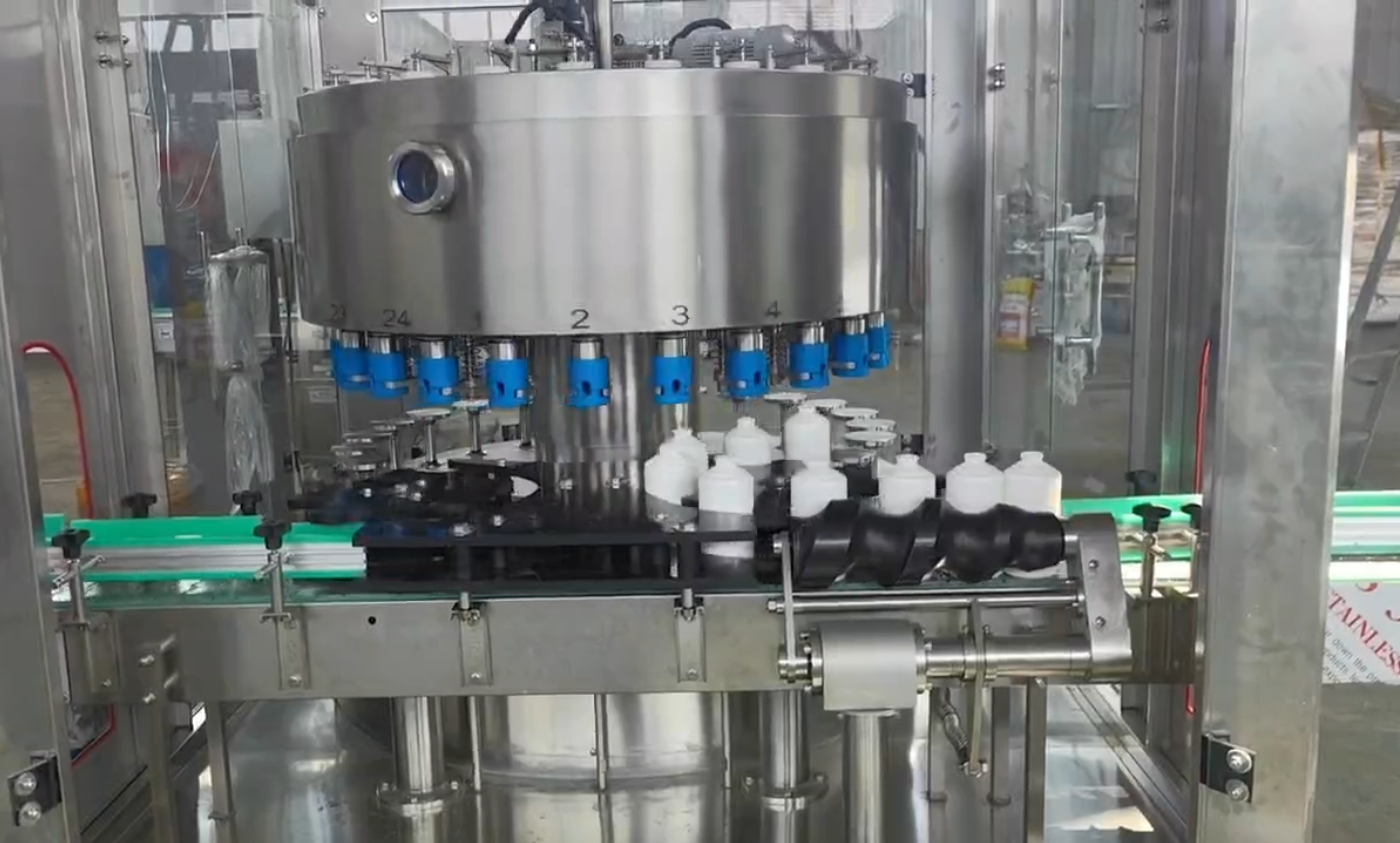
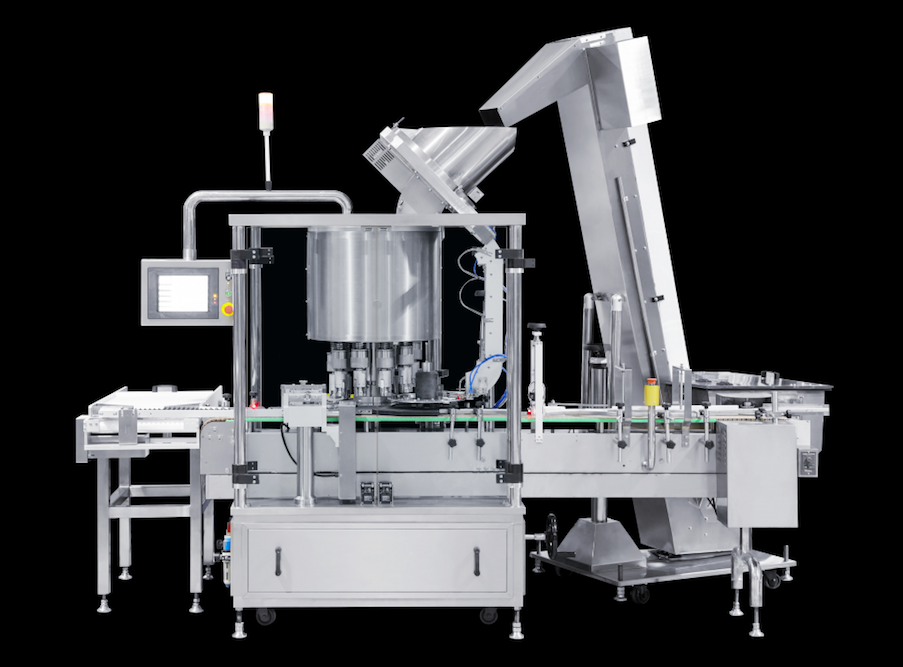
The workflow for Rotary Capping Machine for Shampoo Bottle/Detergent Bottle is as follows:
Capping stage: The bottle caps are conveyed from the feeding hopper to the capping bin via a variable frequency lifting belt. After capping, they are sequentially supplied to the capping head through the feeding channel.
Positioning and Limiting: The sealed container is conveyed by the conveying mechanism to the capping station, where the rotating mechanism (e.g., disc separator or cam mechanism) secures it in position.
Cap rotation mechanism: During rotational motion, the cap rotation head accurately grasps the bottle cap and applies controllable torque through magnetic torque control or servo tracking to complete the tightening process.
Detection and Elimination: Built-in sensors automatically identify defective products with uncovered lids, misaligned lids, or improperly rotated lids, and remove them through an elimination device to ensure a high pass rate.
Control System: The entire machine is uniformly controlled by a PLC, supporting functions such as variable frequency speed regulation, torque adjustment, and automatic shutdown in case of faults, suitable for standalone operation or connected production systems.
This type of equipment is typically constructed from stainless steel 304 material, compliant with GMP standards, and suitable for containers made of various materials such as glass bottles and plastic bottles. The diameter range of the rotating caps generally ranges from Φ10 to Φ50 mm.
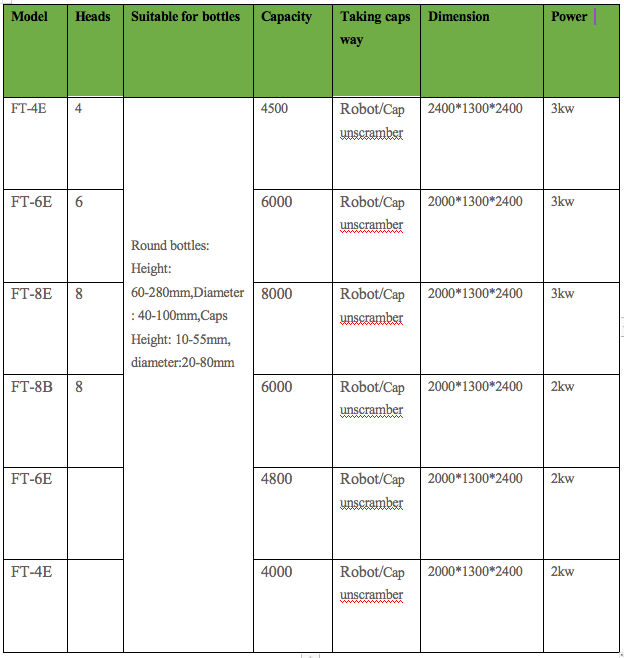
Parameters for Rotary Capping Machine for Shampoo Bottle/Detergent Bottle:
The main functions for Rotary Capping Machine for Shampoo Bottle/Detergent Bottle:
The core functionality of this Rotary Capping Machine for Shampoo Bottle/Detergent Bottle lies in the seamless integration of its components with operational workflows. First, the bottle feeding mechanism precisely positions the bottle body to be capped at the rotation stage, establishing a foundation for subsequent operations. The capping mechanism then plays a pivotal role by automatically adjusting the rotation angle according to bottle mouth dimensions, ensuring both efficiency and accuracy during the capping process. Through coordinated operation between the cap storage system and capping head, automated material feeding and capping are achieved. After capping completion, the bottle ejection mechanism swiftly removes bottles to create space for subsequent processing steps. Notably, the control system continuously performs intelligent monitoring and regulation throughout the process, enabling flexible equipment adjustments to meet production demands. Leveraging this principle, the rotary capping machine significantly enhances production efficiency while substantially reducing labor costs. Widely applicable across food, pharmaceutical, and cosmetic industries, it demonstrates exceptional performance characterized by high efficiency, precision, and reliability.